DISPATCH
Interviews with the people who actually move the world's freight.
This week: a dock supervisor who rerouted container flows at 2 a.m., a procurement lead who rewired supplier networks during canal closures, and a warehouse architect who redesigned pick paths to shave eleven seconds off every order.
Dispatch is a weekly newsletter that sits down with mid-career logistics professionals — the people whose decisions move hundreds of millions of dollars of freight — and stays with them long enough to get past the talking points.
No press releases. No vendor content. Just the work.
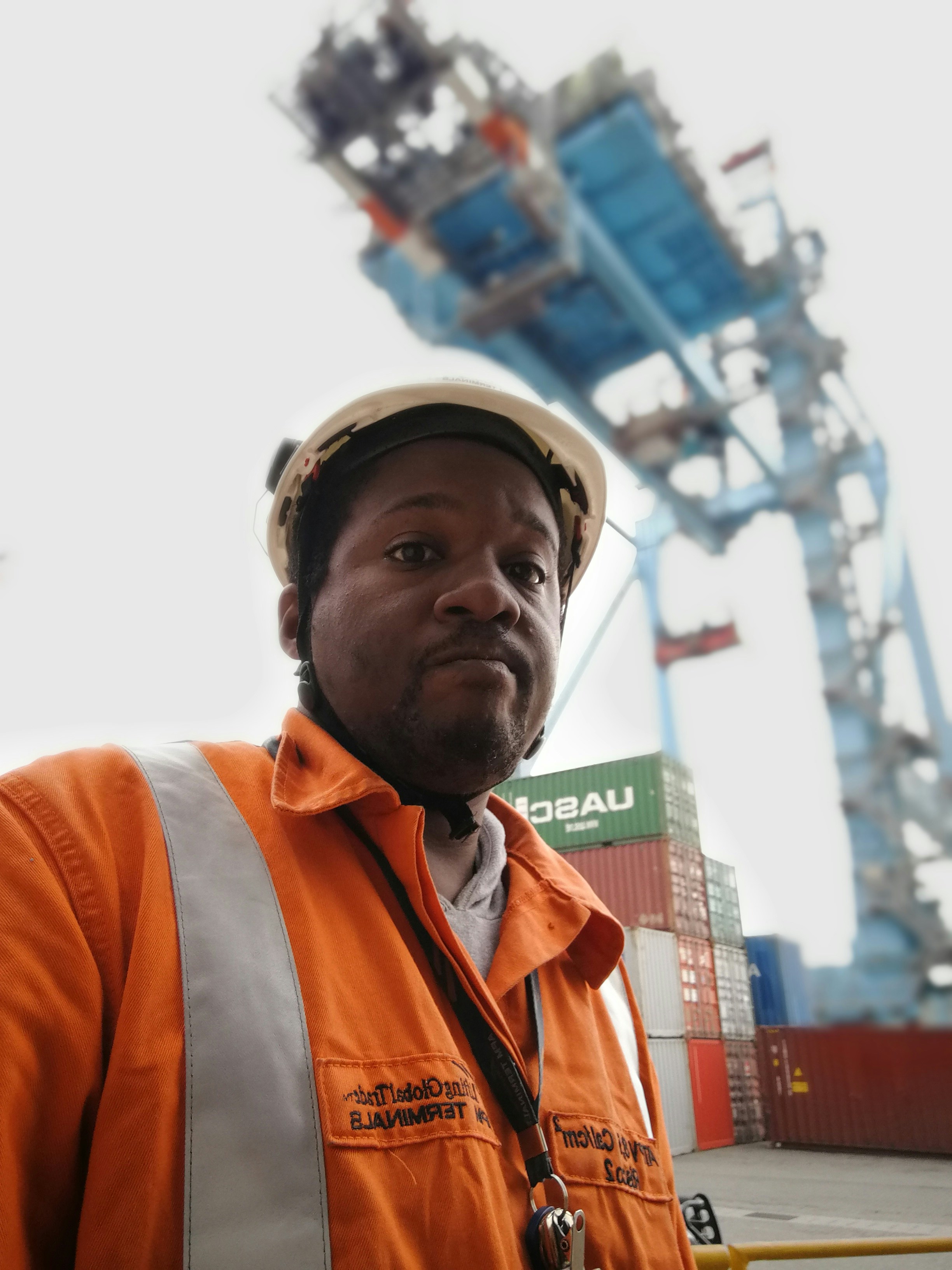
Profile
Denise Okafor
Terminal Operations Supervisor
Pacific Basin Terminals · Long Beach, CA
"At 2 a.m. you don't have the luxury of waiting for a committee. The containers are either moving or they're costing someone money."
When the feeder vessel Meridian Star arrived six hours early on a Tuesday night in November, Denise Okafor had twelve minutes to decide whether to redirect three hundred and forty containers to the secondary berth or hold them for the scheduled morning window. She chose the redirect.
"The TOS flagged it as a conflict immediately," she says, leaning back in the chair in her office overlooking the yard. "But I knew from the weather data that the morning window was going to compress. If we waited, we'd be stacking dry runs on top of a tide constraint. So we moved."
The decision shaved nineteen hours off the dwell time for that vessel — and created a template that her team has now run eight times since. The insight wasn't in the software. It was in reading three systems simultaneously and trusting what the numbers weren't saying.
Of goods moved by sea freight annually — roughly 80% of all international trade by volume. Every bottleneck in that chain has a human being deciding how to clear it.

Profile
Rajesh Pillai
Global Procurement Lead
Hartwell Industrial Group · Houston, TX
"The Suez disruption didn't break our network. It exposed what we'd been pretending wasn't there for three years."
Rajesh Pillai had spent the better part of 2023 building what he thought was a resilient supplier network. Single-source on seventeen critical components, all with contractual volume commitments. Then the canal closures hit, and he spent the next six weeks learning what resilience actually costs.
"We had to airfreight bearings from a backup supplier in Taiwan that we'd never actually qualified," he says. "The unit cost was four times what we'd been paying. But the real cost was the three weeks we lost before we admitted we needed to call them."
What came out of that period was a dual-source policy that his team now calls the 72-Hour Rule: any component with a lead time under seventy-two hours must have a qualified alternate within a hundred miles of the primary. The policy added 6% to his procurement budget. It has already prevented two production stoppages.
The full interview with Rajesh runs to 4,200 words. It covers the 72-Hour Rule, his supplier qualification framework, and what he'd do differently in 2020.
Read the Next InterviewEstimated annual cost of supply chain disruptions to global manufacturers. The practitioners in Dispatch are the ones writing the playbooks to contain that number.

Profile
Carla Stein-Morrison
Distribution Center Architect
Vanguard Fulfillment Partners · Memphis, TN
"Eleven seconds sounds like nothing. Multiply it by forty thousand picks a day and you have a full-time employee doing nothing but walking."
The redesign of the Memphis facility started with a single question that Carla Stein-Morrison had been asking for two years: why does the most-picked SKU live in aisle fourteen? The answer, when she finally got it, was that nobody remembered. It had been placed there in 2019 and no one had looked at the velocity data since.
"Slotting is the kind of thing that everyone knows matters and nobody has time to do properly," she says. "You optimize it once and then the product mix shifts and the building slowly drifts back to random."
Her redesign moved the top two hundred SKUs — the ones representing sixty-three percent of all picks — into a dedicated forward pick zone within eighteen feet of the pack stations. The average pick path dropped from forty-two seconds to thirty-one. At forty thousand picks a day, that's over a hundred hours recovered every shift.
The conversation continues
in your inbox, every week.
Each issue sits down with one logistics professional and stays with them long enough to get past the talking points. No press releases. No sponsored content. Just the work.
Free to read · Subscriber archive access from issue one
Forty-four issues.
Forty-four practitioners.
Browse the Full Archive →Marcus Webb
Crisis OpsVP Freight Operations · Coastal Pacific Logistics
Rerouting 4,000 containers during the Baltimore bridge closure
Priya Nambiar
ProcurementSenior Procurement Manager · Meridian Industrial
Building a dual-source strategy after a single-supplier failure cost $2.3M
Tomás Reyes
WarehouseDistribution Center Director · Southwest Fulfillment Co.
How slotting optimization cut travel time by 14% in a 600,000 sq ft facility
Anika Johansson
Last MileHead of Last-Mile Strategy · Nordic Express
Designing a micro-fulfillment network that dropped same-day cost per parcel by $1.80
Derek Calloway
Port OpsTerminal Operations Manager · Gulf Coast Port Authority
Night shift decisions that cleared a 9-day vessel backlog in 72 hours
Fatima Al-Rashid
InventorySupply Chain Analyst · Hadley & Sons Manufacturing
Using APICS CPIM frameworks to cut safety stock by 22% without service failures
Every issue is available from the beginning.
Browse the Full Archive — Issue 001 through today →